Beyond the Postcard
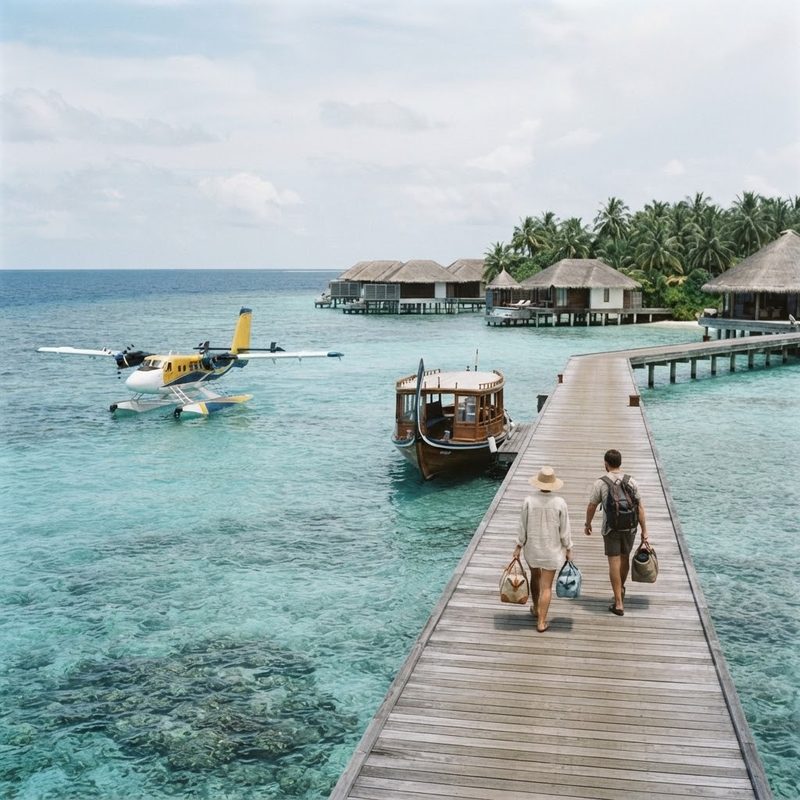
The Maldives sells itself on beaches: white sand, clear water, exotic everything. It is also one of the most expensive resort destinations on the planet, which is why for decades only the very wealthy knew anything about it.
The country is a scatter of volcanic islands in the Arabian Sea, part of the Indian Ocean, and the climate works all year, with air and water both sitting around 25 to 30 degrees Celsius. The first hotel opened in 1971, the resort industry was reorganised in 2003, and since then the choice has widened to every category and price band.
The structure is what interests me. The nation is built from separate atolls, each with its own lagoon, reef and character. This piece is about Ari, the largest atoll in the archipelago with 44 islands, and about tiny Rasdu, sitting just to the north of it.
One budgeting rule I learned the hard way: on an atoll holiday you pay twice, once for the room and once for the transfer, because almost no hotel sits near the airport. Price the seaplane or the boat before you price the villa, and check whether meals are included, since eating on a private island is rarely cheap.
Life on Ari and Rasdu
Restaurants cover every cuisine you can name, plus specialists: one place doing only seafood, another doing only grill. Coconut plantations take up large areas of both atolls, which is why the inland air smells the way it does.
The activities are as odd as they are varied. Chess, billiards and tennis, of course, and then crab races: you pay, you pick a crab, you cheer for it, and the only aim is for yours to cross first. I am told it produces more noise than any sport on the island.
For the selective there are helicopter flights over islands, beaches, lagoons and parks. If you want the pilot's seat instead of the passenger one, that means courses and a certificate, so it is neither cheap nor quick. Anyone who would rather stay nearer the water can buy a seaplane ticket instead. Spa treatments are offered on every island, and each hotel keeps its own particular speciality.
The temperature barely moves across the year, so the real choice is rain. The drier stretch runs from about December to April, when the sea is calmest and visibility for divers is at its best; the rest of the year brings short storms, lower rates and greener islands. Both work, provided you know which trade-off you are buying.
Four Hotels, Four Different Ideas
- Nika Island Resort, in the northwest of Ari Atoll, has the reputation for romance. A seaplane from the airport takes about 25 minutes. At exactly midnight every light on the island, streetlamps, restaurants and cafes, goes off for three minutes, so couples can say the three words, or anyone can lie on the sand and count stars properly.
- Banyan Tree Madivaru is for people who want nobody else around: a 35-minute seaplane hop from the airport, a small number of villas, and a butler assigned to each one so guests never queue for anything.
- W Retreat and Spa sits 80 km out, half an hour by seaplane, aimed at travellers who want high standards, serious restaurants and bars, and staff who remember what you ordered the day before.
- Sun Island Resort and Spa, about 100 km out in Rasdu Atoll, ranks among the biggest properties in the country, with a freshwater pool said to be the largest around and instructors for both land and water sports.
Getting There from Male
The capital is the hub, and the two atolls are reached differently:
- Ari: about 30 minutes by seaplane.
- Rasdu: roughly 2.5 hours by high-speed boat.
Seaplanes fly only in daylight, so a late evening arrival in Male means a night near the airport before you reach the island. Boats keep their own timetable and slow down in a swell. Build a margin into the first day and you will not start the holiday arguing with a schedule.
Some hotels run an excursion to Male itself, covering the museum, the markets, the shops and the rest of the city's sights, which is worth doing at least once if you want the country beyond the lagoon.
If You Get Tired of Lying Down
The list is long, and most of it is included or cheap to add:
- Diving and snorkelling on the house reefs.
- Windsurfing, sailing, catamarans and water skiing.
- Sea kayaking and banana rides.
- Jet skis and parasailing.
- Cycling around the island.
Whichever atoll you choose, the principle is the same: pick the hotel that matches what you actually want from the week, then let everything else take care of itself.