Packing looks like the easiest part of a trip until you are standing over an open case the night before the ferry. What comes, how it stacks, what honestly stays at home: those three questions have cost me more stress than any border crossing. Here is the routine I have settled on after too many departures.
Sort the pile first
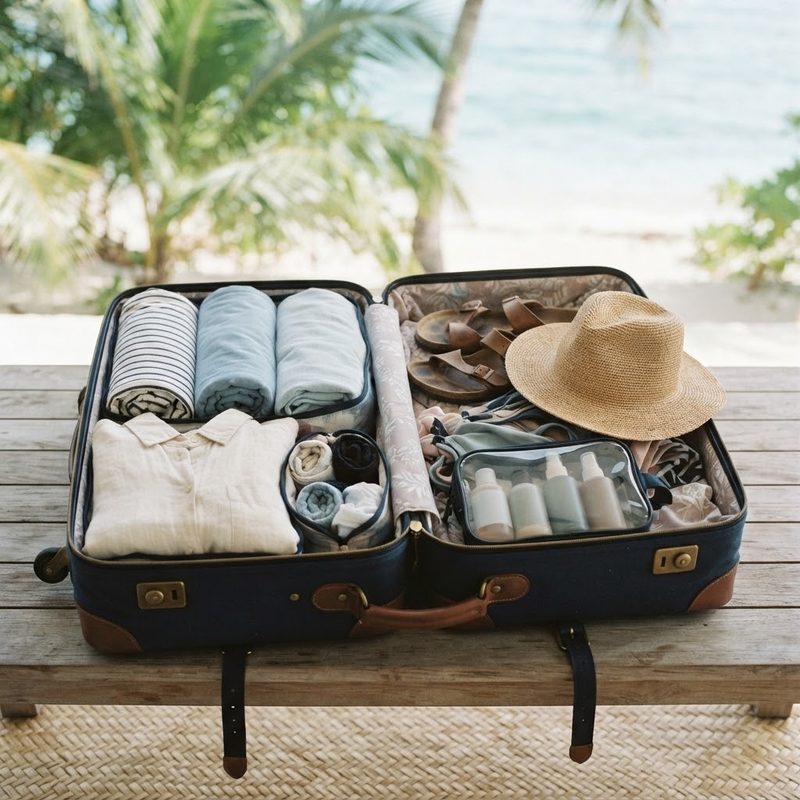
Everything depends on where you are going. A beach week, a ski trip and a city of museums need three completely different wardrobes, and mixing them is how people end up paying for half a suitcase they never open. Start by writing a list of everything you think you need, then go back through it and strike out every item you could survive without. What remains is your real packing list.
The next step is physical: lay the survivors out on the bed and build one outfit per day, matched to the forecast at your destination. Refuse anything heavy or bulky that eats the volume of three lighter pieces, and favour tops that work with trousers, shorts and a skirt alike. Mix-and-match beats coordinated single-use every time, and I say that as someone who once packed a dress for one evening and carried it through four countries.
Only after the case is closed should you decide your hand luggage. Gadgets, charger, money, cards and documents go in the bag at your feet; everything else belongs in the hold. Read your airline's luggage conditions before you leave the house as well, because discovering the weight limit at the check-in desk means repacking on the floor in front of a queue, or leaving things behind in a locker.
Four ways to close the lid
There are four recognised methods, and the choice is yours to make:
- The classic stack. Fold everything into flat piles. Experienced travellers avoid it, since the stacks swallow space and the clothes arrive creased.
- The chaotic stuff. Acceptable when you are out of time: push the whole pile into the case in any order and hope the lid meets the base. It usually needs a shove, sometimes a knee.
- The rolled method. The one I use most, and the one seasoned packers recommend. Twisting each garment into a tight roll can free up to thirty per cent of the case, and the fabric comes out almost unwrinkled, so you can put it straight on when you arrive. Tuck small items into shoes and jacket pockets to fill the gaps.
- The cross-layer method. Lay the largest and most crease-prone pieces flat across the bottom, arrange everything else in the centre, then wrap each item over the bundle in turn. Strap the whole thing down at the end and the clothes arrive barely marked.
Small tools that buy space
Four helpers do most of the work when the case is already full: a garment pouch, a vacuum bag, a travel compression bag and one compact cosmetic bag that doubles for several jobs. Each of them exists to make the packing easier and to win back a little room, and between them they are cheaper than paying for an extra bag at the gate. I keep the compression bags for the return leg, when the market finds and the wet swimwear have to fit into the same case that arrived empty.